Mayahuel & The Symbol of Agave
By Jade Roy
Here’s a little story about our little, yet very educational encounter with a certain Mexican at SOMM wine shop here in Ibiza. We met a man named Horacio from Cultura Mezcal, a Mexican who came off as a bit grumpy at first but soon turned into an enthusiastic mezcal storyteller during the masterclass. He passionately took us back to the origins of the agave plant, underscoring its deep roots in Mexican culture. Horacio made sure we understood everything about this remarkable plant, and why many Mexicans treasure it. From understanding the history to enjoying our sips, reminding us just how much respect the agave deserves.
In this article, I will go through different Mesoamerican tales and try to shed some light and interpret the wisdom that I have learned researching those stories.
1. MAYAHUEL, from princess to Goddess
The legend begins, as they often do, with a bad guy: Tzitzimime, who threatens the world. She’s one of those nocturnal demons, almost always female, who battled the sun from dawn to dusk. This cruel goddess only allows a few hours of light a day to the world IF, she receives enough sacrifices. The people suffering, and Quetzalcoatl: the god of rain and wind, struck by the unfair situation decides to chase that goddess through the skies. Instead of facing her, he finds himself in front of her gorgeous granddaughter, Princess Mayahuel who has been kept captive all this time. It was love at first sight.
Quetzalcoatl brought his new love back home to show her the world. It would have been too simple to live this fantasy with the threat of Tzitzimime’s vengeance upon them. Therefore, they turned themselves into trees and every time the wind would blow their leaves would caress each other. This was enough for them. Unfortunately, the goddess had demons sniffing around and what was once a clever trick was now discovered.
Enraged by the deception, she punished Mayahuel. Shattering her into hundreds of pieces, scattered around the fields. As for Quetzalcoatl, devastated by his loss, he picked up each piece lovingly. The Gods felt for him and to help their mourning friend, they puzzled back the pieces into an agave plant; this way Quetzalcoatl would be left with enough to drink and forget his sadness.
This transformation symbolizes rebirth and the continuation of life in a new form, linking Mayahuel forever with fertility, nourishment, and the sacred qualities of the agave plant. Thus, her death at the hands of Tzitzimime is a pivotal moment, leading to her divine transformation and the creation of a symbol central to cultural and religious practices in ancient Mesoamerica. She’s often portrayed springing out of an agave, holding cups of pulque, thorns, or agave fibres.
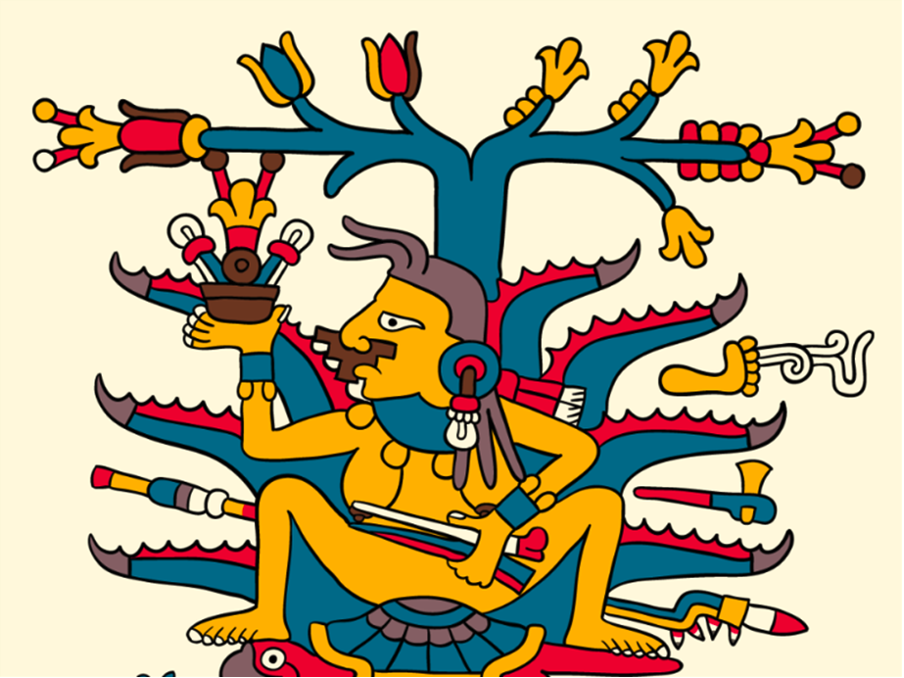
2. THE CENTZON TOTOCHTIN, the allegory of excess
The legend keeps on giving!
Mayahuel devious as she can be. Had a one-night stand with Patecatl, the Lord of 13 Days, and had 400 rabbits as children, whom she fed pulque to with her 400 breasts. Each of her children was responsible for the emotional state produced by the fermented drink of pulque. Due to this, those who drank octli (as pulque was called before the Conquest) behaved in different ways, since they were possessed by one of these beings. In essence : melancholy, joy or seduction, etc., could appear, just like with us humans.
Now why 400? For the Aztecs, the concept of infinity starts at 400, you’d say “I’m drunk like the 400 rabbits” AKA “ I am beyond wasted”
“400 rabbits to represent unbridled sexuality, all shades of drunk and an evergreen life as long as there’s pulque”
During pre-Hispanic times, both pulque and rabbits were strongly linked to sexuality. Pre-Hispanic peoples were aware that to produce octli, it was necessary to kill the maguey plant, which is why the fermented drink was related to semen, breast milk, and blood. Likewise, rabbits were related to fertility and unbridled sexuality.
Rabbits are also strongly connected to the moon, as pulque could only be made following the movements of the moon to extract the aguamiel at the perfect time.
Now we see that each rabbit and God knows there are many, are an analogy of the rich culture and beliefs of the Aztecs. With rabbits getting drunk on pulque we understand that moderation in every excess is key. It’s not unusual for tales to teach us a lesson…
3. PULQUE, the milky way through the Gods
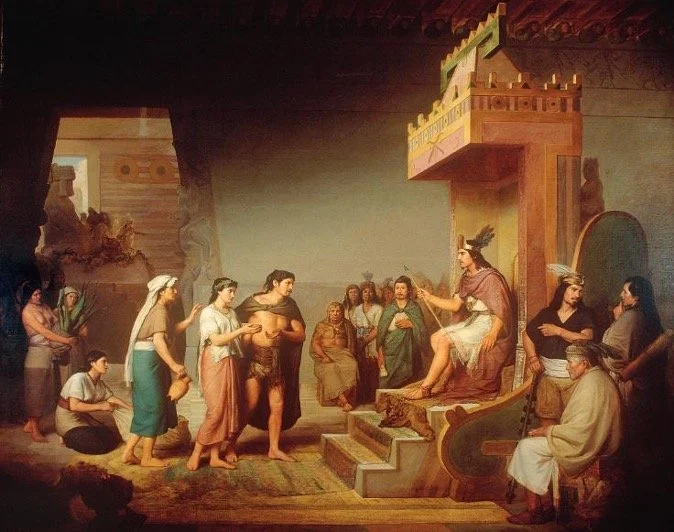
The Discovery of Pulque - José Maria Obregón 1869
What is pulque ?
Pulque is a traditional drink made from the fermentation of agave, its consistency is thick and milky. Just like anything related to the agave, it has its own esoteric dimension. Many tales depict the discovery of pulque ; probably comes first the divinity myth, then the more human side of it, as we see on the painting above.
Let’s talk about it : Young girl Xóchitl has a green thumb and wanders around (now) Central Mexico. One day she’s passing among the magueys and sees animals scratching the surface of the plant and lapping out the sweet sap. Surprised by this discovery, she tries herself only realising the excitement coursing through her body. After a few days she decided to bring some to the king and his family however, couldn’t help but notice that the juice had changed color and got sweeter…
What happened here ? Just like our actual pulque, the sap is “alive” and starts fermenting as soon as it's scooped from the heart of the agave, with the Mexican heat on top of that, we’re soon producing alcohol !
So who created pulque ? We’ve established that Mayahuel is the mother of the agave and possibly of pulque but just as much as other deities. The ambivalence in choosing who’s right or wrong - is wrong ! The Mesoamerican spiritual world is far too rich of tales and many deities share a common vessel, yet they show different facets of a same element :
Yes Mayahuel displays her femininity, fertility, her motherly attributes but to me, pulque emphasizes the masculinity involved in the making. No one can help but see that milky sap as semen, no sexual connotation needed, just as with everything, the agave gets “pollinated” too. In that sense, Los Centzontotochin again strongly associated with sexuality, takes over that manly part as much as Patecatl. Another less mentioned figure in the story of pulque clearly outshined by Mayahuel. He is often credited alongside the goddess as the father of the 400 drunk rabbits, but also with the discovery and creation of Pulque. Patecatl is also a god of healing. With pulque considered to have medicinal properties, which linked him to both the spiritual and practical aspects of Aztec life.
“ Pulque for those who had to fall not on the battlefield but on the sacrificial stone”
Who would drink Pulque ?
We realize the mythological importance of pulque intimately linked to the Gods, almost to get through to them somehow. A beverage drunk on special occasions, always with quite a dramatic dimension to it. Pulque was the elixir to be taken by the one sacrificed. The brave who had to fall "not on the battlefield but on the sacrificial stone" to appease the gods.
We could think that pulque was for the common crowd, but truth is that it’s always been for the Gods, priests, kings, warriors, and rulers. Anyone who would have a good reason to try and get closer to the mighty skies. They believed that the reciprocal relationship between humans and the Divine was necessary to maintain balance of the natural world.
4. CONCLUSION
To conclude. Through these stories we understand the richness of the Aztec world. That it is nature, who created these myths. You find animals, divinities, the moon, the sun and a whole spiderweb of relatives who complete the balance of their world in their way of explaining the natural phenomena through illustrated stories. Well, everybody likes a good story am I right? I’m not surprised these persisted through generations as they forced respect towards tradition. Go on any mezcal website and there will be a bit about Mayahuel, or the symbol of the agave. Hence just like mezcal, this tradition is part of the Mexican DNA and what an achievement that was!
The legend of Mayahuel revealed to the world the God-given gift: agave and its spiritual virtues. Somehow through the agave the divinities kept an eye out for their people. Giving them a plant that will feed them, get them drunk and put clothes on their backs. Not to mention that the agave created the unbreakable bond between humans and God. People need something to believe in and who better than the Gods to take care of you ?
Horacio transmitted to us the Mexican heritage in a general sense, the respect of the myths and their natural continuation nowadays.
I hope next time you’ll have a sip of mezcal or pulque, you will do it with these stories in mind, remembering what every drop implies, let it be the liquid connection to mightier skies for you too.